Banff is unusual: a real town, with schools and a hospital, set entirely inside a national park. Its streets are short, its edges are wild, and most of what is worth seeing lies within an hour's walk of the main street. A car is more of a burden here than a help. Park it once, and walk.
This route covers the town's core in a loop of about 8 to 10 km, with options to shorten it. It works best on a clear day, starting in the morning and ending at the lakes in the evening light.
Banff Avenue and the mountain at the end of it
The main street, Banff Avenue, is lined with shops and busy with traffic for much of the year. Its best feature is its alignment: it points straight at Cascade Mountain, which fills the northern end of the view. Walk south along it towards the river, and the mountain stays at your back the whole way.
At the southern end, the stone Banff Park Museum stands near the bridge. Built in the early twentieth century, it is one of the oldest natural history museums in western Canada, a timber building full of mounted animals and old display cases. It is a national historic site in its own right and worth half an hour.
Along the Bow to the falls
Below the bridge, a path follows the south bank of the Bow River downstream. It is flat, shaded and easy, passing under trees with the river sliding by beside you. After a little over a kilometre, the river narrows and drops over a band of rock: Bow Falls. They are not high, but they are wide and powerful, especially in early summer when snowmelt fills the river.
The falls sit close to where the Spray River joins the Bow. Several walking paths meet here, including routes that climb towards the grand old railway hotel above the falls. Keep to the river path for now.
The hot spring where the park began
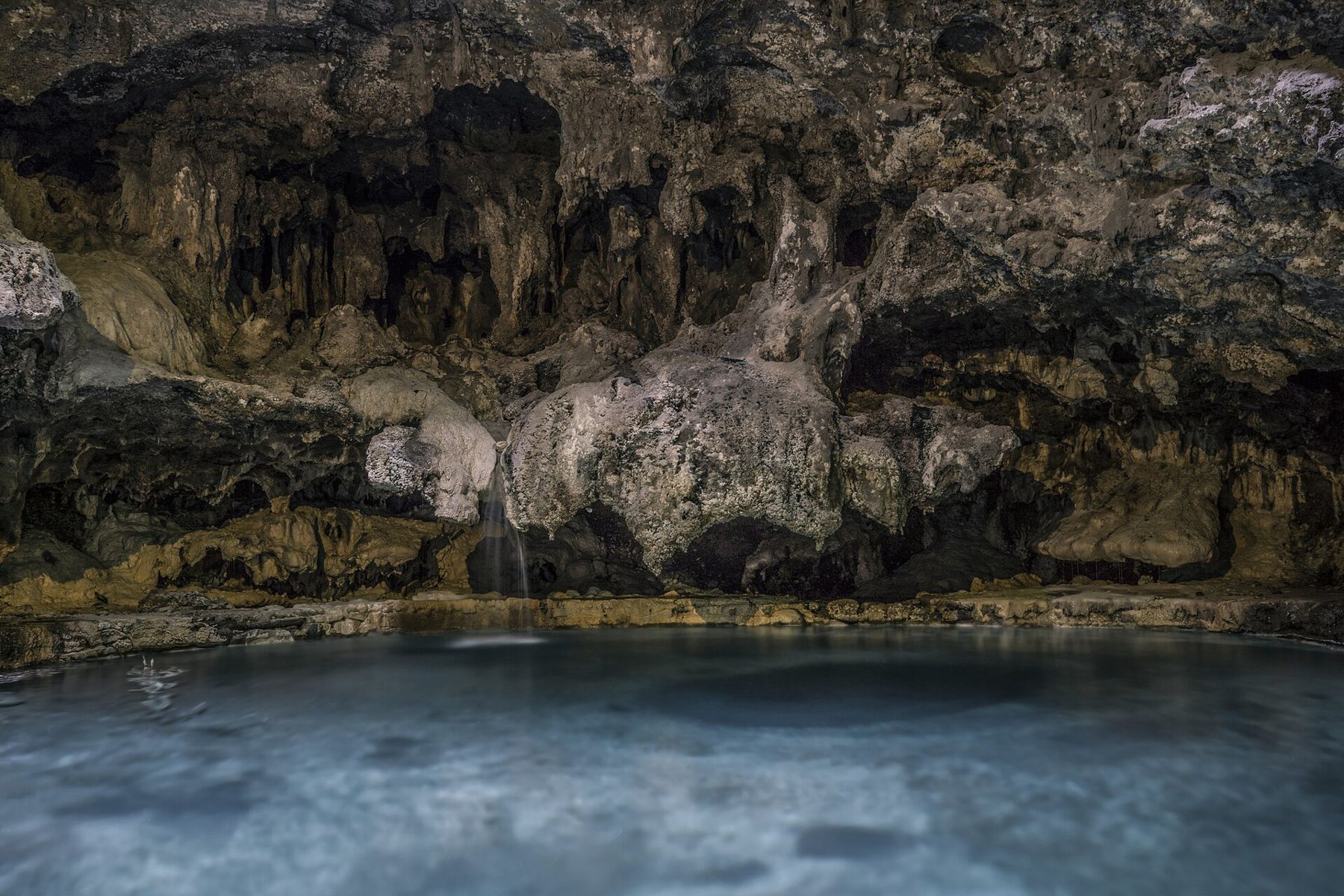
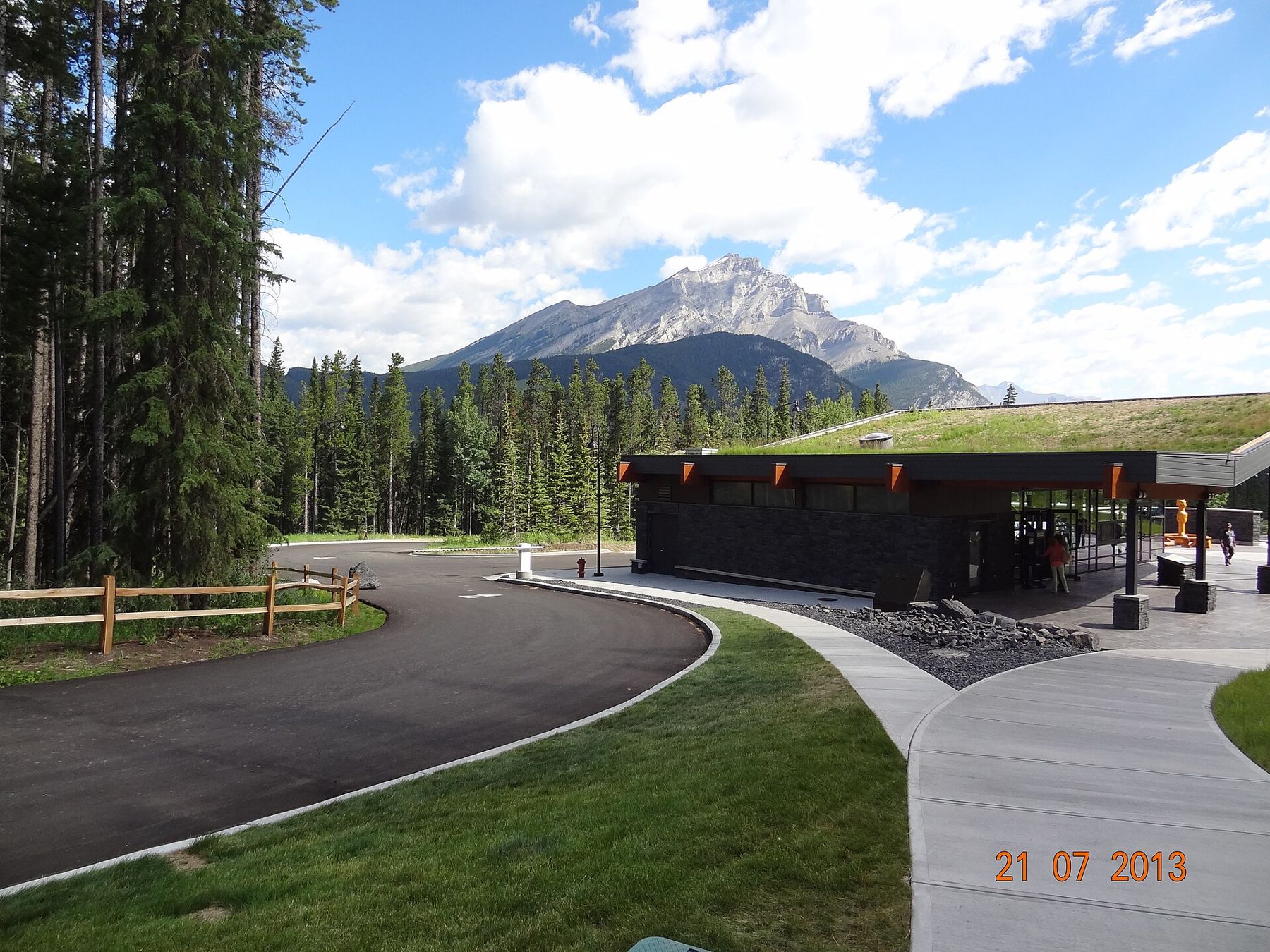
Back across the bridge, the Cave and Basin road runs west along the foot of Sulphur Mountain to the Cave and Basin National Historic Site. In 1883, railway workers found warm mineral water bubbling into a cave and a pool here. The discovery led to the creation of a small reserve around the springs in 1885, which grew into Banff National Park, the first national park in Canada.
The site today has a restored bathhouse, displays on the history of the national parks and boardwalks over the outflow from the springs. The cave itself, reached through a short tunnel, is warm and humid, lit through a hole in its roof. Swimming is no longer allowed: the springs are home to the Banff Springs snail, a tiny endangered species found nowhere else on Earth.
Vermilion Lakes at dusk
From the Cave and Basin, trails lead west through the marshes towards the Vermilion Lakes, a chain of shallow wetlands at the foot of Mount Norquay. They can also be reached by road, just off the western exit from town. In the evening the water often lies still, and Mount Rundle to the south catches the last light. Beaver, muskrat, ospreys and bald eagles live here, and elk often graze on the edges.
The road along the lakes is quiet and suitable for walking or cycling. It is an out-and-back route, so turn round when the light fades, and give yourself time to walk back to town before dark.
Two museums and a quiet bridge
Banff has more museums than a town its size would suggest. Besides the natural history museum by the bridge, the Whyte Museum of the Canadian Rockies on Bear Street covers the art and history of the mountains, with paintings, photographs and archives on the early guides, climbers and residents of the valley. Its grounds include a few historic log homes. The Buffalo Nations Luxton Museum, across the river, focuses on the Indigenous peoples of the northern plains and the Rockies.
The pedestrian bridge a little upstream of the main bridge is the best spot in town for a pause: the river runs fast and clear below, and Cascade Mountain and Mount Rundle frame the view in each direction. In winter, when the edges of the river freeze, it is one of the coldest places in town, and one of the most beautiful.
Elk, bears and town manners
Elk walk through Banff regularly, and they are wild animals, not pets. In autumn the males are aggressive during the rut, and in spring the females defend newborn calves. Give them at least 30 metres. Bears sometimes pass through the edges of town, especially in berry season; if you walk the river paths at dawn or dusk, make noise and carry bear spray.
Town rules exist for these animals too: litter bins are bear-proof, and leaving food out is an offence.
Shorter versions and onward walks
For a shorter loop, walk from Banff Avenue to Bow Falls and back, about an hour. For a longer day, add the Fenland Trail, a flat loop through forest along a backwater of the Bow, or the steep walk up Tunnel Mountain, the small peak inside the town limits with views over the valley. Many people leave Banff on the slow road to Lake Louise, or head for the lakes beyond it.