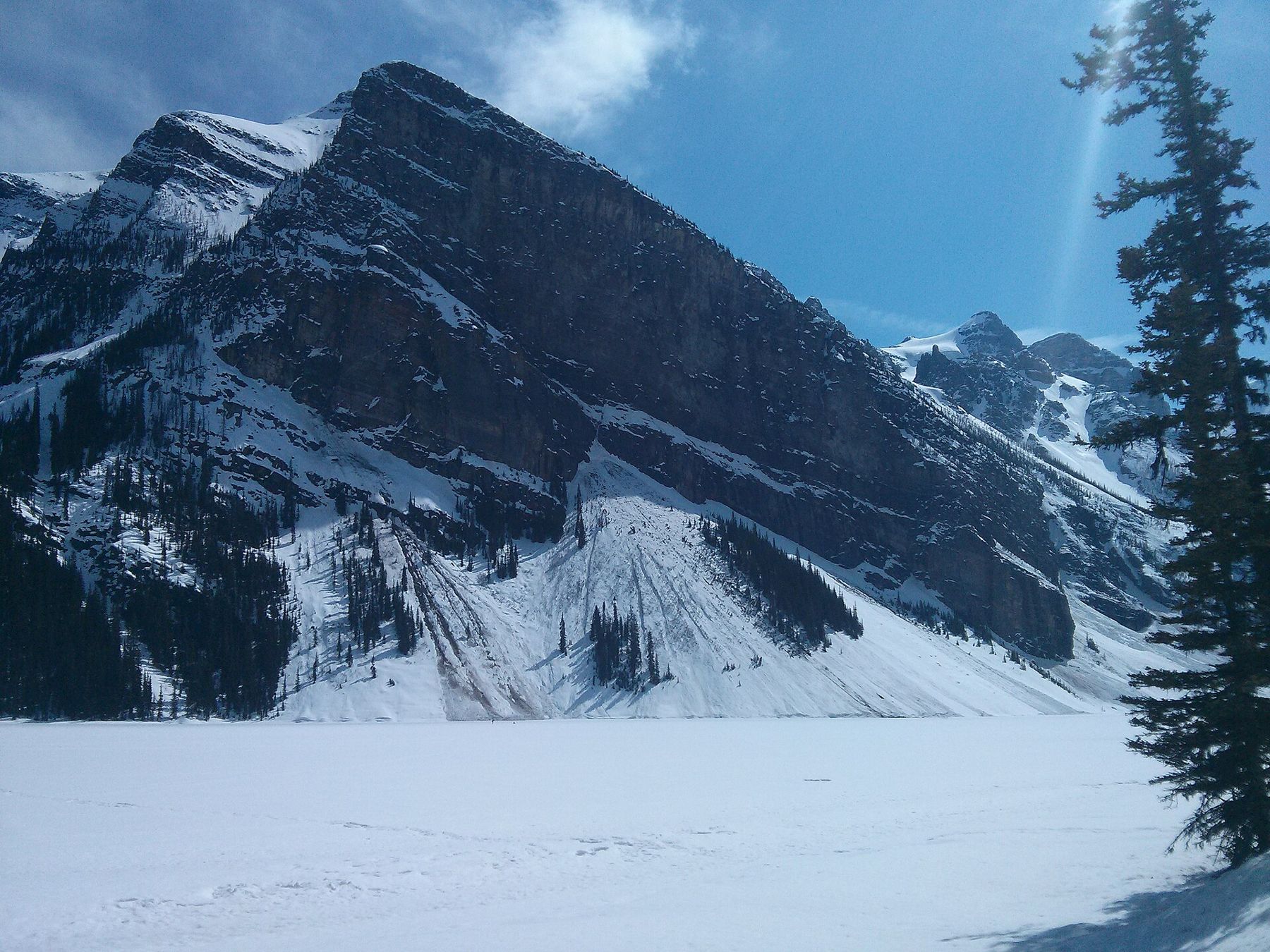
The Canadian Rockies have two short summers and two long shoulder seasons. For most visitors, the mountains open in July and close in September. But the weeks either side, from May to June and from September to October, have their own character. The crowds are thinner, the light is lower, and the landscape changes from week to week. They also come with rules, closures and surprises that catch people out every year.
This page sorts out what to expect, road by road and month by month.
Lakes that stay frozen
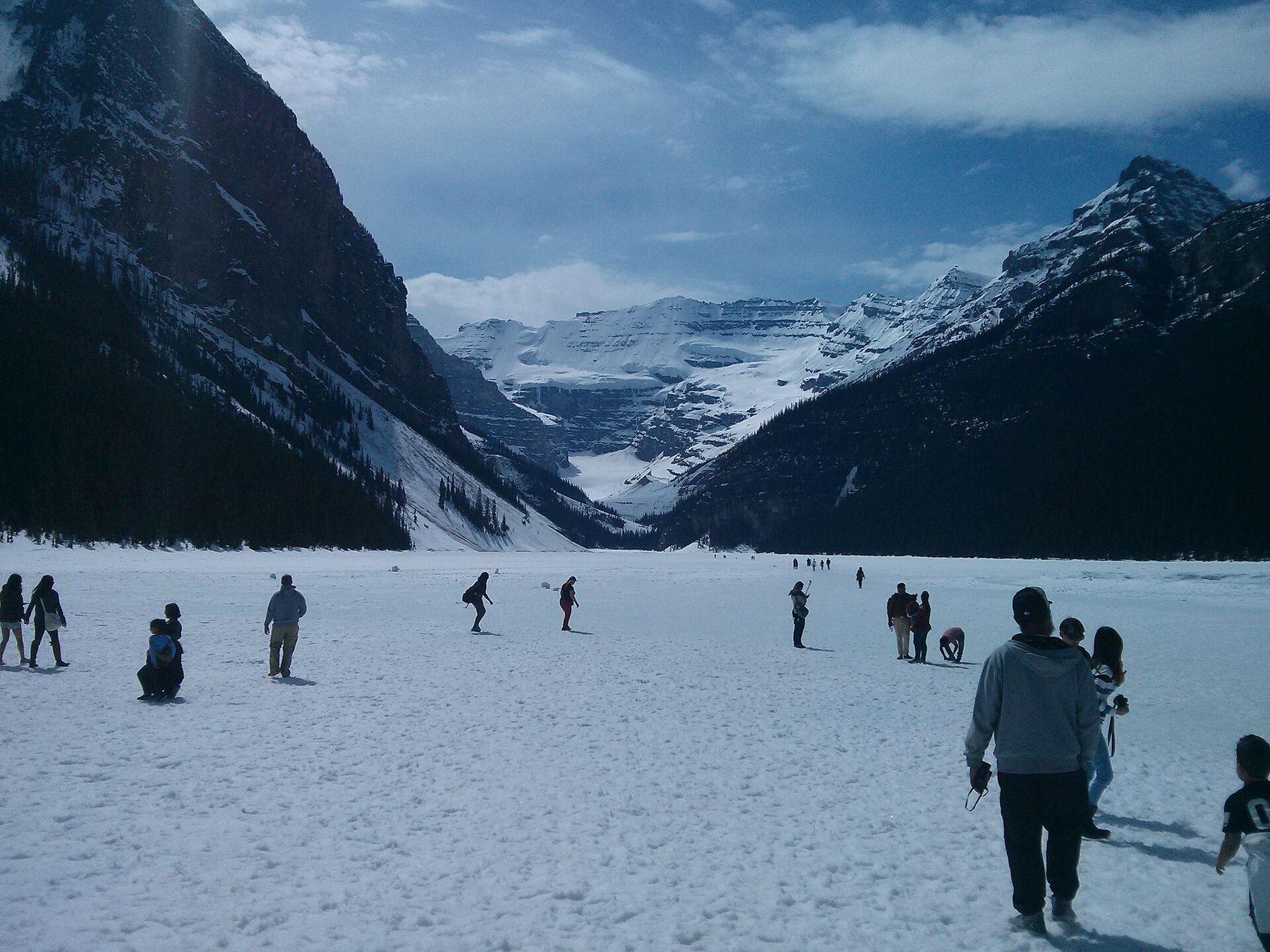
The famous lakes of the Rockies sit high, and their ice lasts much longer than people expect. Lake Louise usually stays frozen into late May or early June. Moraine Lake and Peyto Lake can still be white in early June. Even when the ice is gone, the colour often takes a few more weeks to arrive, because the glacial meltwater that turns the lakes turquoise has not yet started flowing.
If you visit in May or early June, expect frozen or half-frozen lakes and grey water rather than the colours of summer postcards. It can still be beautiful: the lakes under snow, framed by white peaks, are a sight in their own right.
Roads with seasons of their own
Several roads in this guide are seasonal. The southern section of Highway 40 over the Highwood Pass is closed every year from 1 December to 15 June. On the Bow Valley Parkway, the eastern section is closed overnight from early March to late June for wildlife. The road to Moraine Lake is closed to private vehicles entirely, and its shuttle season starts around early June. Other side roads, such as the Red Rock Parkway in Waterton, open and close with the snow.
The Icefields Parkway stays open all winter, but it is not maintained like a city road, and it can close at short notice for avalanche control or storms. From 1 November to 1 April, winter tyres or chains are required by law. Services between Lake Louise and Jasper are limited or closed in the off-season.
Also on Highway 93How to drive the Icefields Parkway in one day without rushing itTrails under snow
High trails hold snow long into the summer. In May and June, routes above roughly 2,000 metres may be snowbound or icy, and avalanche slopes above some trails remain dangerous until the snowpack melts. Valley trails and canyon walks are often clear earlier, though shaded sections can be icy. Johnston Canyon has icy catwalks well into spring.
In autumn, snow returns to the high country from September onwards. A warm, golden week can turn into a snowstorm overnight. Microspikes or ice cleats on your boots make a big difference on icy trails at both ends of the season, and trekking poles help on slushy descents.
Wildlife in the shoulder months
Spring is calving season for elk, and the cows are protective and aggressive from May into June. Bears emerge from their dens hungry and spend much of the spring feeding on new growth in the valley bottoms, often close to roads. Autumn brings the elk rut from September into October, when bull elk bugle, gather herds and can charge at people and cars. Give all wildlife more space than you think it needs.
What September and October offer
Early autumn is many people's favourite time in the mountains. The larches turn gold around the high passes in mid to late September, aspen and poplar turn yellow in the valleys, and the air is clear and cold. Crowds drop after the first week of September, and accommodation becomes easier to find.
The trade-off is shorter days, colder nights and the risk of early snow. Some seasonal services close after the Labour Day weekend in early September, and more close in October. Plan with that in mind, and keep a flexible schedule in case a road or trail closes.
What stays open all year
The Trans-Canada Highway, the Yellowhead and the towns of Banff, Lake Louise and Jasper are open all year, with services, shops and visitor centres. The Bow Valley Parkway and the northern part of Highway 40 are open all winter, as are most valley roads. Hot springs, museums and short valley walks keep going in every season, and the dark skies of winter are a reason to visit on their own; see Jasper after dark.
A Parks Canada pass is needed in the national parks and a Kananaskis Conservation Pass in Kananaskis Country, whatever the season.
The morning-of check
Conditions in the shoulder seasons change faster than any guide can keep up with. On the day you travel, check the provincial road report, the national park and provincial park websites for closures, and a mountain weather forecast. Build slack into your plans, keep the fuel tank above half, and carry a shovel, a blanket and some food in the car between October and May, when a closure can leave you waiting on a quiet road for hours. Be ready to swap a high trail for a valley walk or a lake for a canyon. The mountains in May and October reward people who bend with them, and punish those who stick to a summer plan in a season that is still deciding what it wants to be.