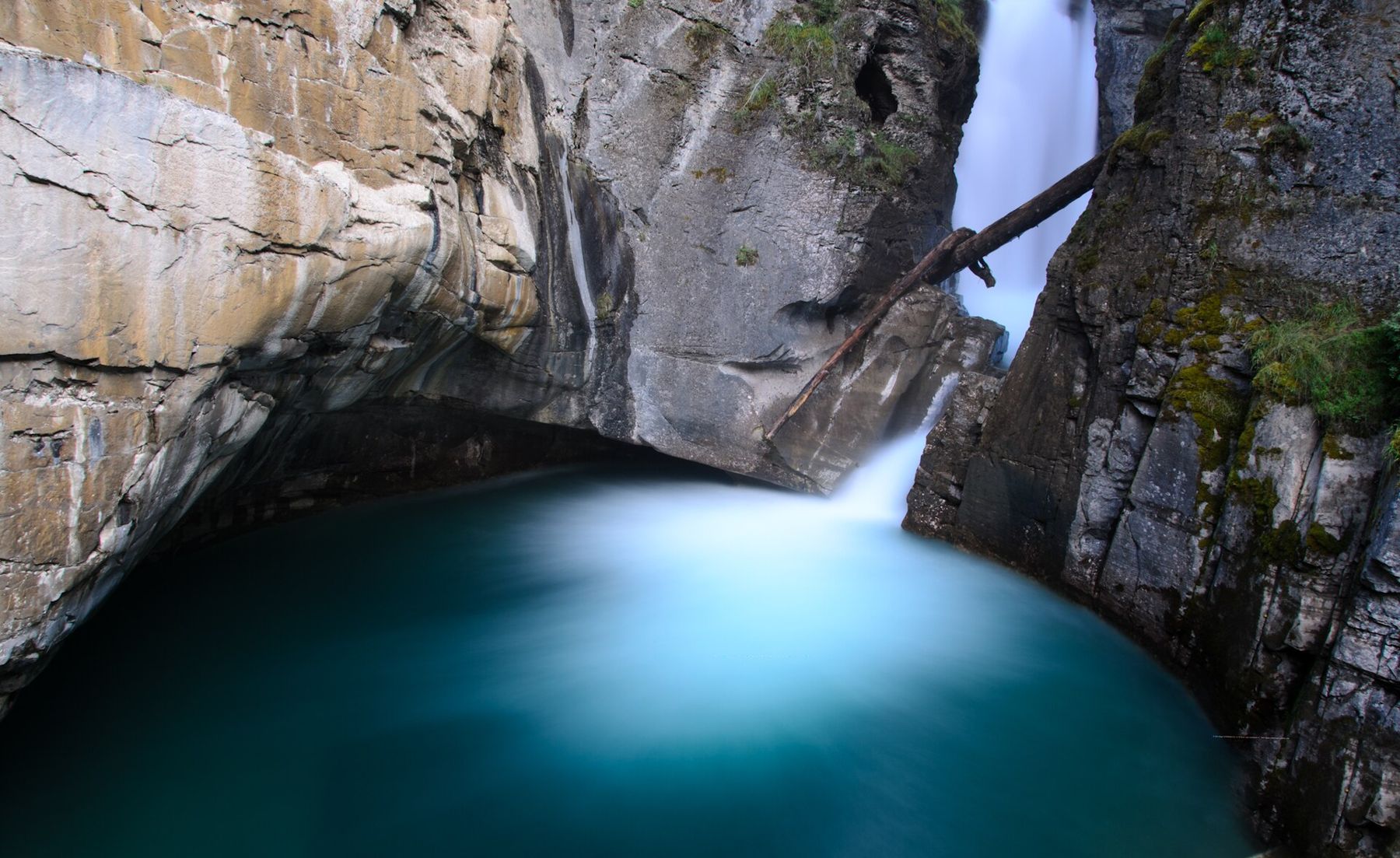
Johnston Canyon is the most visited stop on the Bow Valley Parkway, and for good reason. Johnston Creek has cut a narrow slot through layers of limestone, in places only a few metres wide and many metres deep, and a trail of steel catwalks hangs from the canyon walls above the rushing water. Two waterfalls interrupt the climb, and beyond them the trail leaves the canyon for a quiet valley of cold, coloured springs.
The challenge is timing. In summer, the car park can fill before ten in the morning and the catwalks become a single-file queue. Come early or come late, and the canyon changes character entirely.
To the Lower Falls
From the trailhead beside the parkway, the path climbs gently along the creek and soon reaches the first catwalks. These are bolted directly into the rock face and run just above the water, so you look down into a churning green-blue channel with walls rising on both sides. The walk to the Lower Falls is about 1.1 km and takes twenty to thirty minutes.
At the Lower Falls, a bridge crosses the creek to a short tunnel through the rock. It opens onto a small ledge right beside the plunge pool, close enough to feel the spray. There is usually a line here in summer, but it moves.
On to the Upper Falls
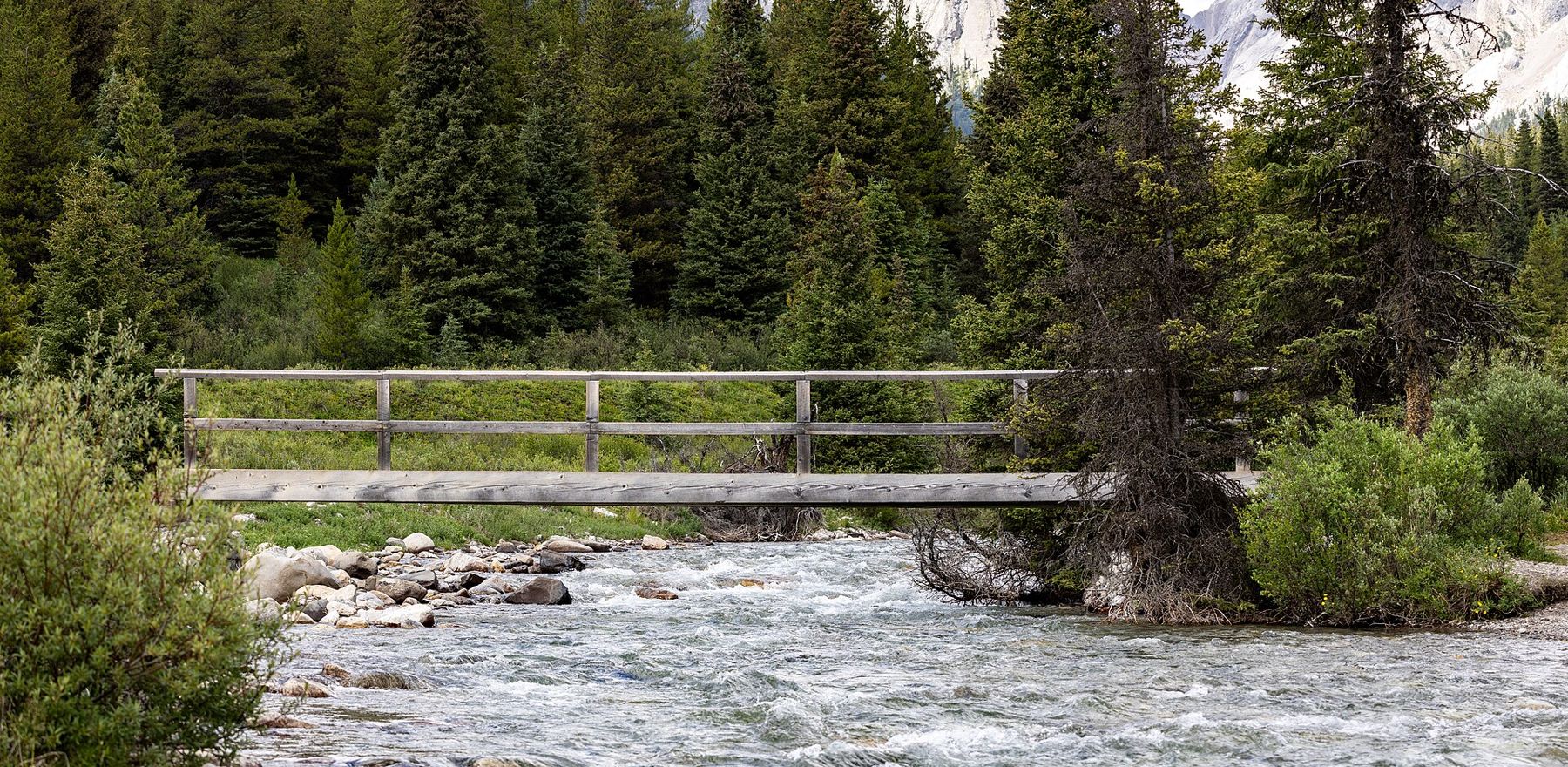
Most visitors turn back at the Lower Falls, and that is when the trail improves. The path to the Upper Falls continues another 1.5 km or so, climbing more steadily through forest with more catwalks and viewpoints along the way. The Upper Falls drop about 30 metres over a cliff into a pool, with a lower viewing platform at the base and an upper one beside the brink.
The canyon walls near the Upper Falls are also home to a small colony of black swifts, a rare bird in Alberta that nests on wet cliff ledges behind the spray. They are hard to see and should never be disturbed; signs explain the area that is protected for them.
The Ink Pots, for those who keep going
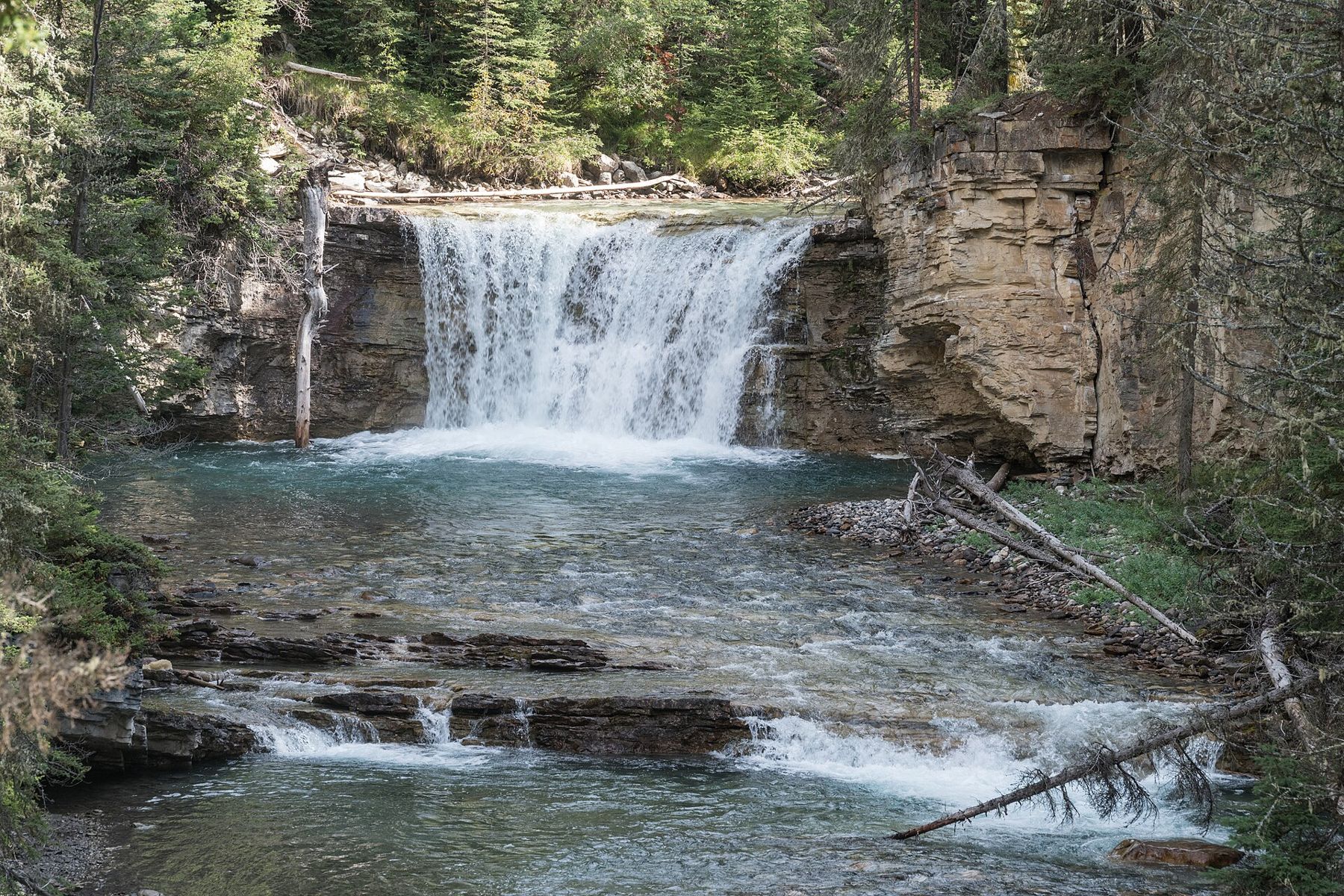
Beyond the Upper Falls the trail leaves the canyon and climbs over a forested ridge before descending into an open meadow beside Johnston Creek. Here are the Ink Pots: a cluster of small springs that well up through the gravel at a constant cool temperature. The pools are tinted green and blue, and you can see the sand moving at the bottom where water bubbles in.
The Ink Pots are about 5.8 km from the trailhead, so the round trip is close to 12 km and takes most of a day at an easy pace. The reward is a quiet valley with mountains all around, a fraction of the people at the falls, and good places to sit with lunch.
Winter on the ice
In winter the falls freeze into curtains of blue ice, and the canyon becomes one of the best-known winter walks in the Rockies. The catwalks stay open, but the trail is icy and packed, and ice cleats or other traction on your boots make a real difference to safety and comfort. Guided ice walks run in the season, and you will often see ice climbers on the frozen Upper Falls.
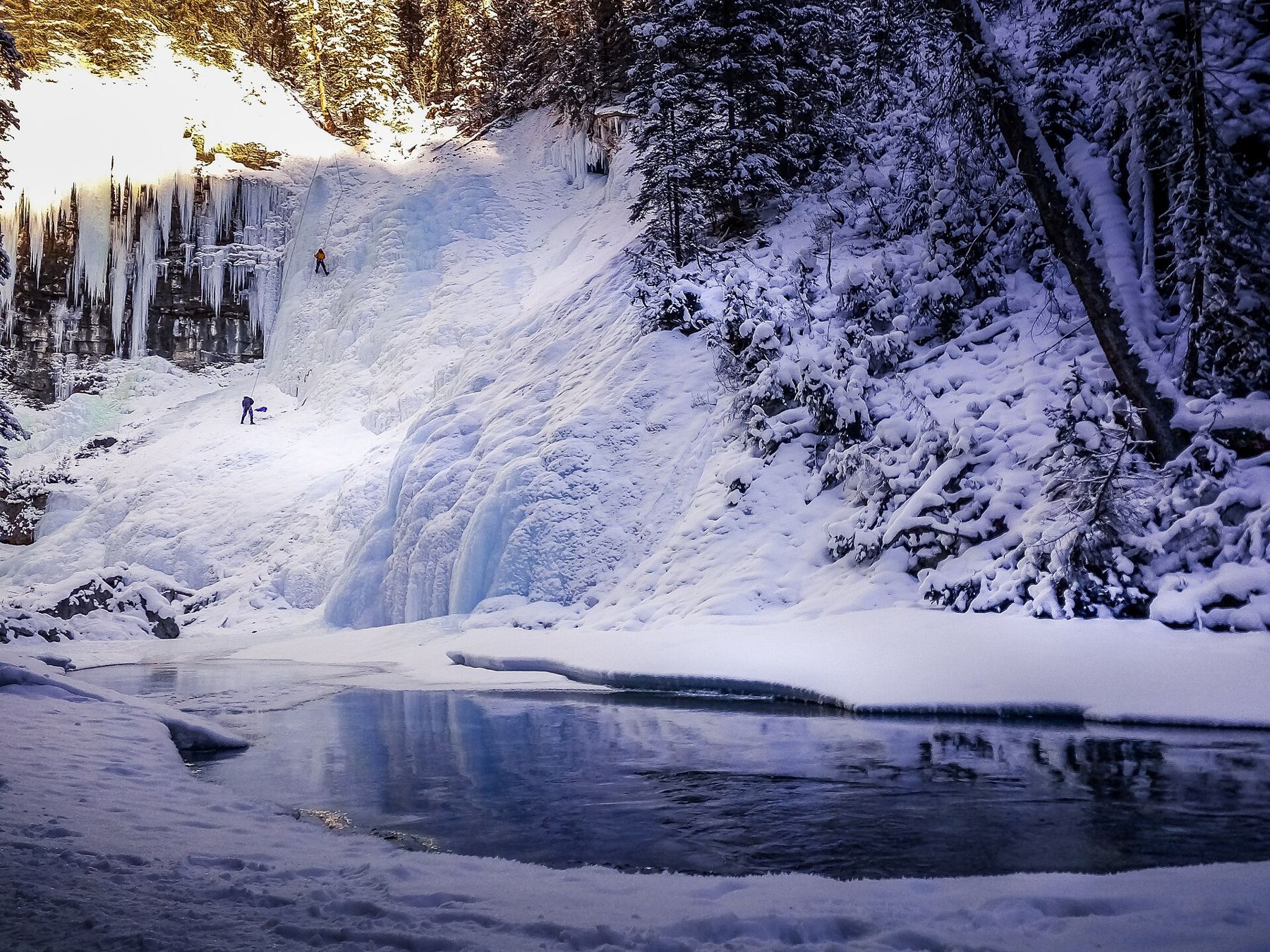
Days are short, and the canyon is shaded, so start in late morning when the light is best and give yourself time to be back at the car before dark.
Most visitors turn back at the Lower Falls, and that is when the trail improves.
Johnston Canyon sits about a third of the way along the Bow Valley Parkway, which makes it a natural first stop on a drive west from Banff. It pairs well with the view of Castle Mountain a little further on and with a quiet afternoon around the townsite on your return.
The parkway itself has seasonal rules. In spring, part of it is closed to vehicles overnight to give wildlife space, and in recent years a section has been set aside for cyclists for parts of spring and early autumn. The rules change, so check before you plan a dawn or dusk visit.
How the canyon was made
Johnston Creek drains a high valley north of the Bow River. Where it meets the edge of the main valley, it has cut down through tilted beds of limestone and dolomite rather than spilling over them, carving a slot that is in places far deeper than it is wide. The walls show the layering clearly: bands of grey and buff rock, some fractured into blocks, some smoothed into scoops and hollows by the water.
Look for places where the creek has drilled round potholes into the rock. They form where stones caught in an eddy are spun round and round by the current, grinding a hole that grows over centuries. Some of the old potholes now sit high and dry above today's water level, a record of where the creek once ran.
The cave behind the Lower Falls is part of the same story. The water has undercut the softer rock at the base of the fall, and a natural opening was later widened into the short tunnel used by visitors today.
The canyon is narrow and deep, so direct sun reaches the water only for a few hours around midday in summer. Early morning is cool and shaded, with soft, even light that suits photographs of the catwalks and the falls. By late afternoon, sun catches the upper walls and the trees on the rim. In October, after the first frosts, the crowds thin noticeably and the trail can be almost empty on a weekday morning.
Spring brings high water from snowmelt, when the creek is loud and fast and the falls are at their fullest. Late summer is lower and clearer, and the pools turn a deeper green. Either way, the spray near the falls soaks camera lenses and jackets more than people expect, so keep a dry cloth handy in a pocket.
Keeping it pleasant
Stay on the catwalks and fenced paths. The rock is wet and polished, and people have been seriously hurt climbing over the railings for a better photograph. Dogs must be on a leash. The trail has some narrow sections where groups need to pass in turn, and a little patience keeps it moving for everyone behind you.