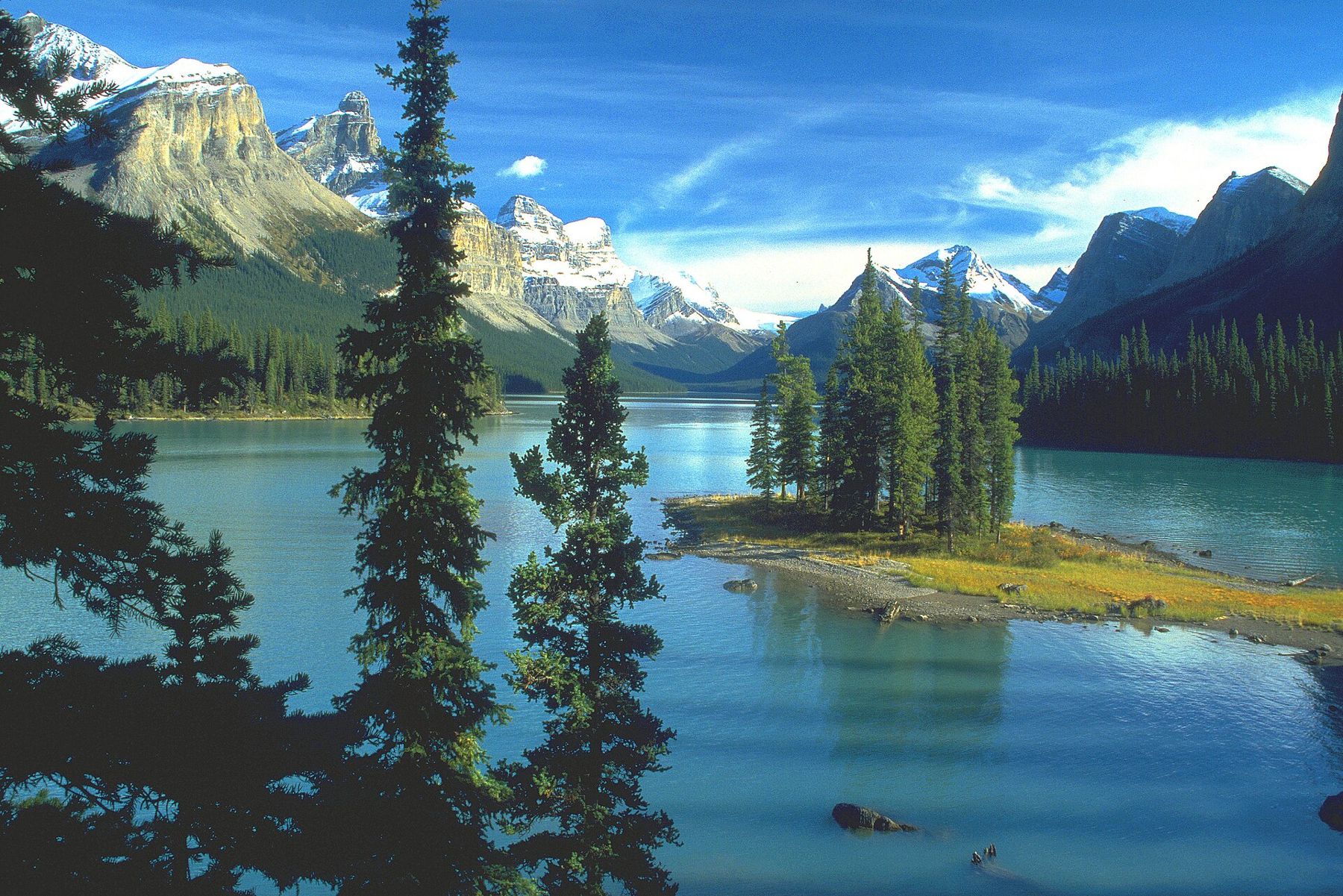
From the edge of Jasper townsite, the Maligne Lake Road climbs east for 45 km into a valley of forest, cliffs and water. It is a dead-end road, so you drive it in and out, but it holds three of the most interesting sights in Jasper National Park: Maligne Canyon, Medicine Lake and Maligne Lake itself. A full day on the road, with stops and walks, is one of the best days in the park.
The road is also one of the best places in the park to see wildlife. Moose, elk, deer, bighorn sheep and bears are seen regularly along it.
Maligne Canyon by its bridges
Maligne Canyon lies only a few kilometres from town. The Maligne River has cut a narrow slot through limestone, more than 50 metres deep in places and only a few metres wide at the top. A trail follows the rim of the canyon downstream, crossing it on a series of footbridges, each with a view down into the gorge. The first and second bridges are near the car park; the full walk down to the lower bridges takes a couple of hours there and back.
The canyon walls are dark, wet and covered in mosses and ferns. Waterfalls pour in from the sides, and in places the river disappears into deep, shadowed pools. In winter, the canyon freezes, and guided icewalks lead along the frozen floor of the gorge.
Part of the water flowing through the lower canyon emerges from springs in the canyon walls. It comes from Medicine Lake, further up the valley, through an underground cave system.
Medicine Lake, the lake that drains away
About 20 km up the road, Medicine Lake lies in a broad valley below steep slopes. In summer it looks like an ordinary lake, long and shallow. In autumn, as the inflow from snowmelt and glaciers slows, the water drains away through holes in the lake bed into an underground river system, and by late autumn the lake has largely disappeared, leaving mudflats and a channel of water. The water re-emerges kilometres away in Maligne Canyon and in springs along the valley.
The underground system is one of the largest of its kind in North America. The Indigenous peoples of the region and early visitors explained the lake's disappearance with stories; scientists confirmed the connection by adding dye to the water. A viewpoint by the road has signs explaining the system.
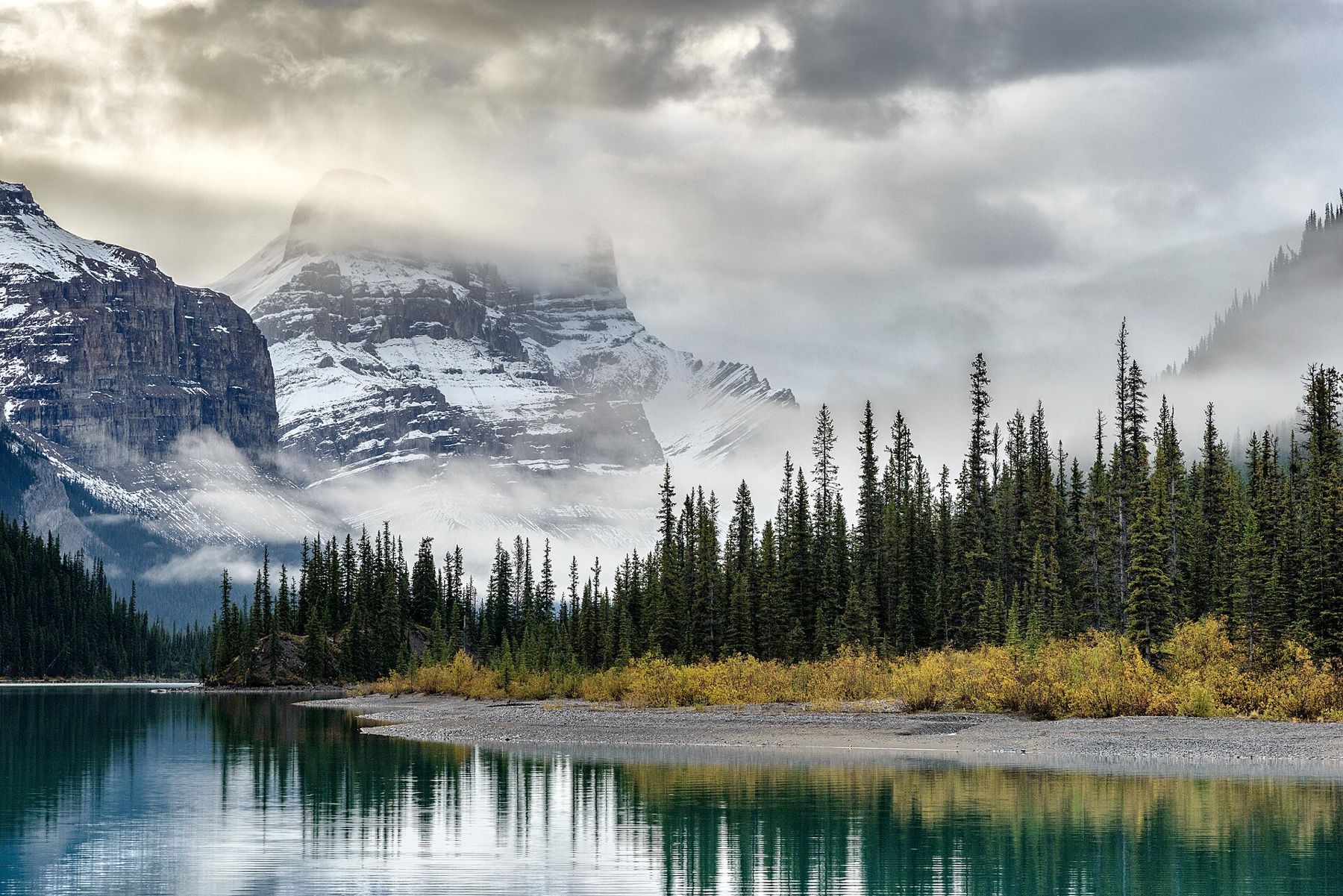
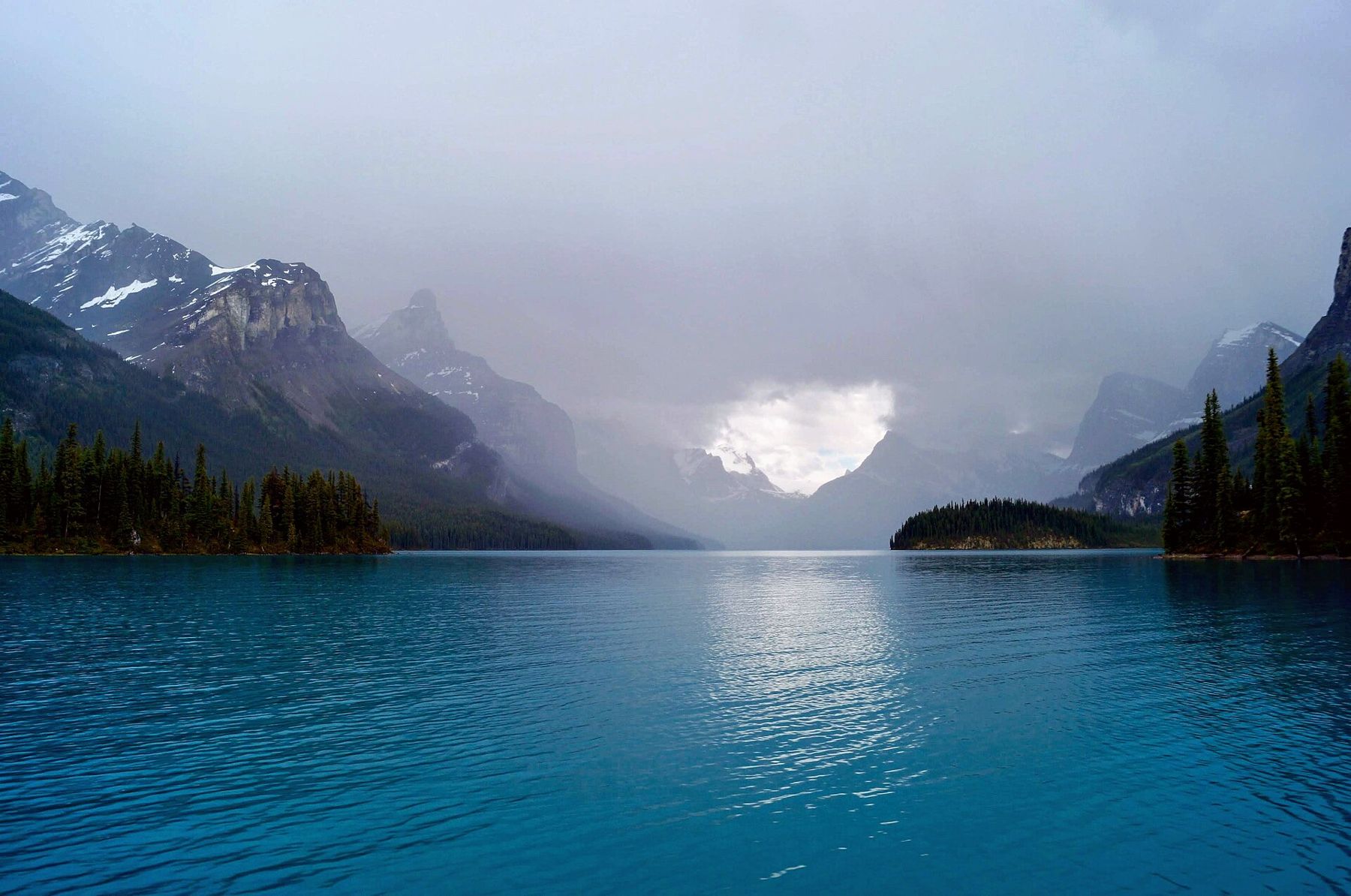
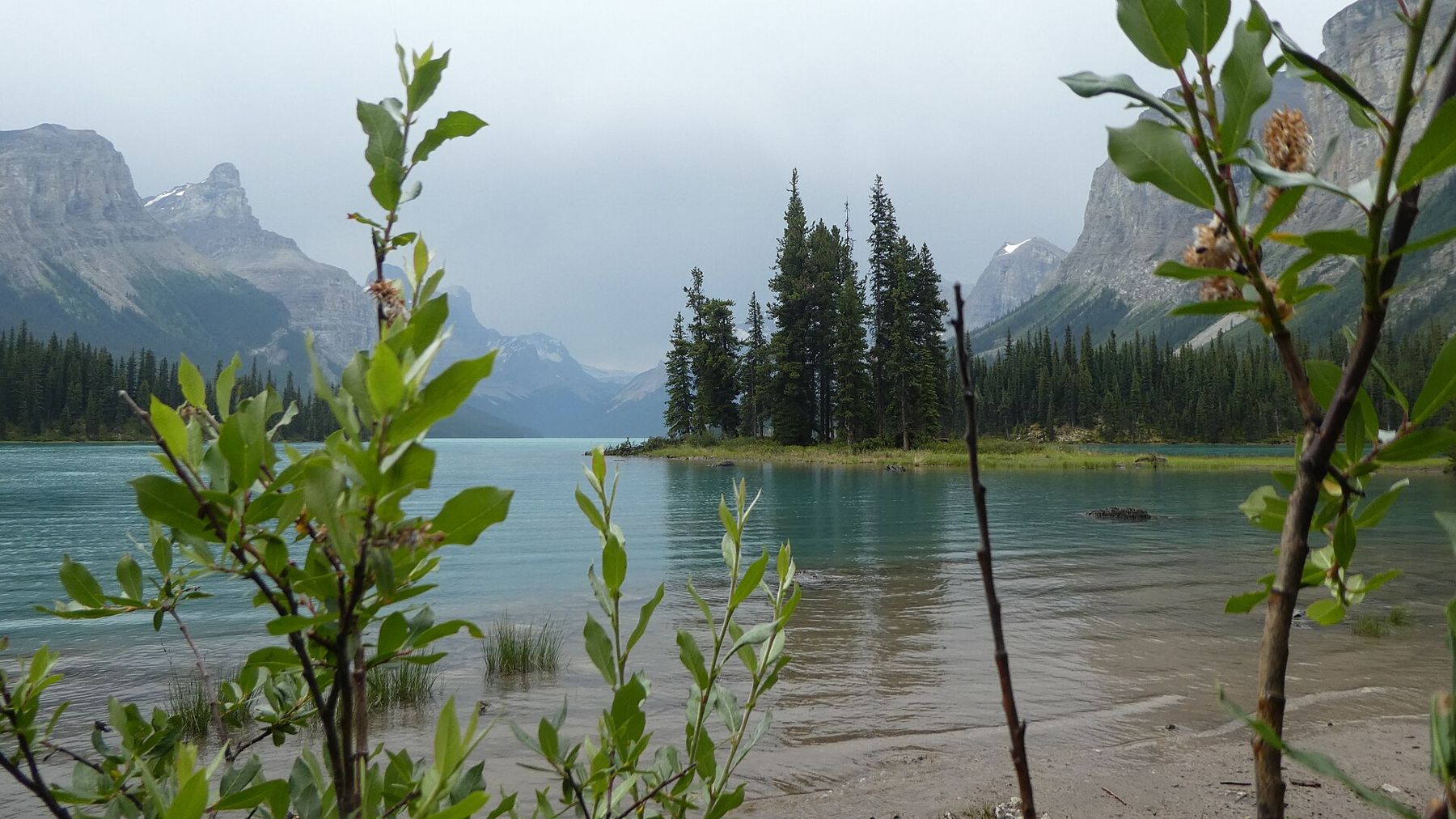
At the end of the road, Maligne Lake stretches about 22 km into the mountains, the largest natural lake in the Canadian Rockies. Glaciers and peaks rise above its far end. Near the road, there is a day-use area with picnic sites and short trails along the shore. Commercial boat cruises run down the lake in summer to Spirit Island, a small, tree-covered islet that is one of the most photographed places in the Rockies; arrangements and access change, so check before you go.
Canoeing on the lake is popular in calm weather, but the water is very cold and the wind can rise quickly. Stay near the shore.
Also on Highway 16Jasper's dark sky: when and where to look upThe Maligne Lake Road passes through prime habitat for moose, which feed in the wet meadows and shallow ponds along the valley, especially at dawn and dusk. Bears feed on roadside vegetation in summer. Woodland caribou once used the higher slopes around the valley, and parts of the area have had seasonal access limits to protect them.
Drive slowly, watch the verges, and stop only where it is safe to pull right off the road. Stay in the car for bears, and keep at least 30 metres from moose and elk, which can be aggressive.
Trails along the valley
Besides the canyon walk, the valley has trails for every level. At Maligne Lake, the Mary Schäffer Loop is an easy walk along the eastern shore with views down the lake; it is named after an early explorer who wrote about the lake in the early twentieth century. The Moose Lake Loop leads through forest to a small lake where moose are often seen. Longer trails climb to the Bald Hills, an alpine ridge with views over the whole lake and the glaciers beyond, a steep half-day hike.
The Opal Hills trail is shorter but steeper, climbing quickly to meadows above the lake. In early summer, snow lingers on the upper parts of these trails, and grizzly bear closures are common. Check at the trailhead before you set off.
A lake named for its difficulty
The Maligne River and Maligne Canyon take their name from a French word meaning wicked or malignant. Early travellers in the nineteenth century gave the name to the river where it joins the Athabasca, because its crossing was difficult and dangerous. The name spread up the valley to the lake, which the early traders and explorers did not see for many years. It remained little known to visitors until the early twentieth century, when the first expeditions reached it from Jasper.
After the 2024 fire
The wildfire that reached Jasper in July 2024 burned forest around the townsite and in parts of the surrounding valleys, including near the start of the Maligne Lake Road. Some facilities, trails and viewpoints around Maligne Canyon were damaged, and some areas were closed while they were made safe. Look up which trails have reopened on the Parks Canada site before driving out. The scenery higher up the valley, around Medicine Lake and Maligne Lake, remains spectacular.
A full day on the road, with stops and walks, is one of the best days in the park.
The road itself rewards a slow pace. Pullouts along Medicine Lake give room to stop without blocking traffic, and the stretch between the lakes often has elk, deer and, in early summer, bears feeding on the verges. Stay in the car when animals are close to the road, keep a distance of at least a hundred metres from bears, and never feed any wildlife. If several cars have stopped, slow down and pass carefully rather than adding to the jam.
A day on this side road
Start early to see wildlife on the road and to find parking at the canyon. Walk the canyon in the morning, stop at Medicine Lake, and spend the middle of the day at Maligne Lake. On the way back, the evening light on the valley is often beautiful. If you are staying in Jasper, end the day under the town's dark skies. For the waterfalls south of town, see Athabasca and Sunwapta Falls.
Weather changes quickly in the valley. A bright morning in Jasper can turn to rain at Maligne Lake, which sits higher and closer to the peaks, so pack a rain shell and an extra layer. Mobile coverage is patchy beyond the canyon. Tell someone your plan if you are walking far from the road.