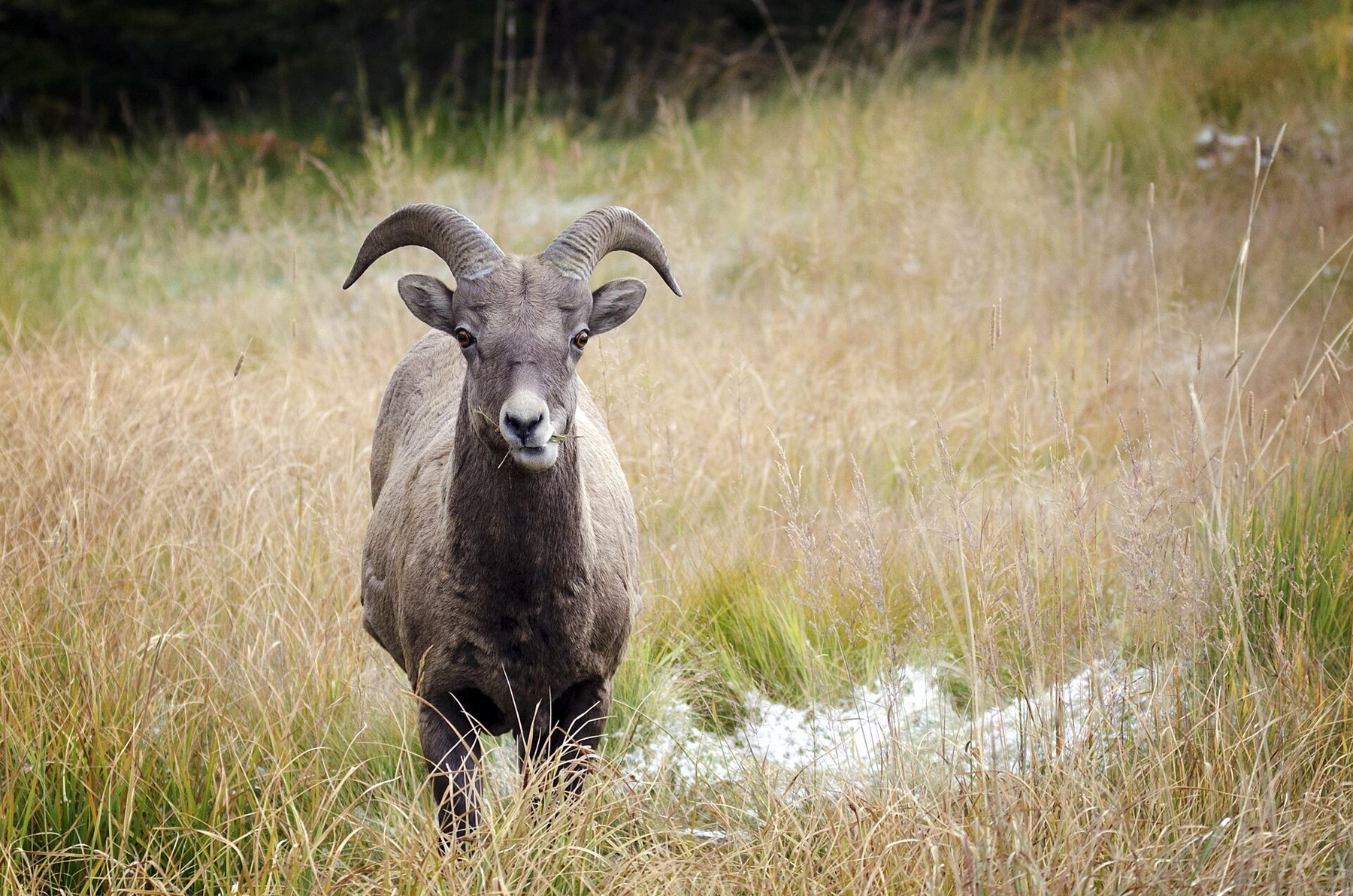
Drive Highway 40 through Kananaskis Country for an hour and the chances are good that you will meet a bighorn sheep on the pavement. Sometimes it is a single ram standing on the yellow line, sometimes a group of ewes and lambs wandering along the shoulder, licking at the asphalt. Further south, in summer, black bears and grizzlies graze the green verges, and elk and moose step out from the trees at dusk.
For many visitors these encounters are the highlight of the drive. They are also where most of the problems in Kananaskis begin, for animals and people alike.
Why the sheep stand on the asphalt
Bighorn sheep need minerals, especially salt, that their diet of grasses and shrubs does not always provide. Roads are treated with salt in winter, and the residue stays on the pavement and in the gravel at the edges long after the snow has gone. Sheep learn quickly where to find it, and certain stretches of Highway 40 have become regular licks.
Rams, ewes and lambs will stand on the road for long stretches, sometimes moving only when a car is very close. They are not tame, and they are not waiting for food. They are there for the salt, and the more cars stop beside them, the more relaxed they become around traffic, which makes collisions more likely.
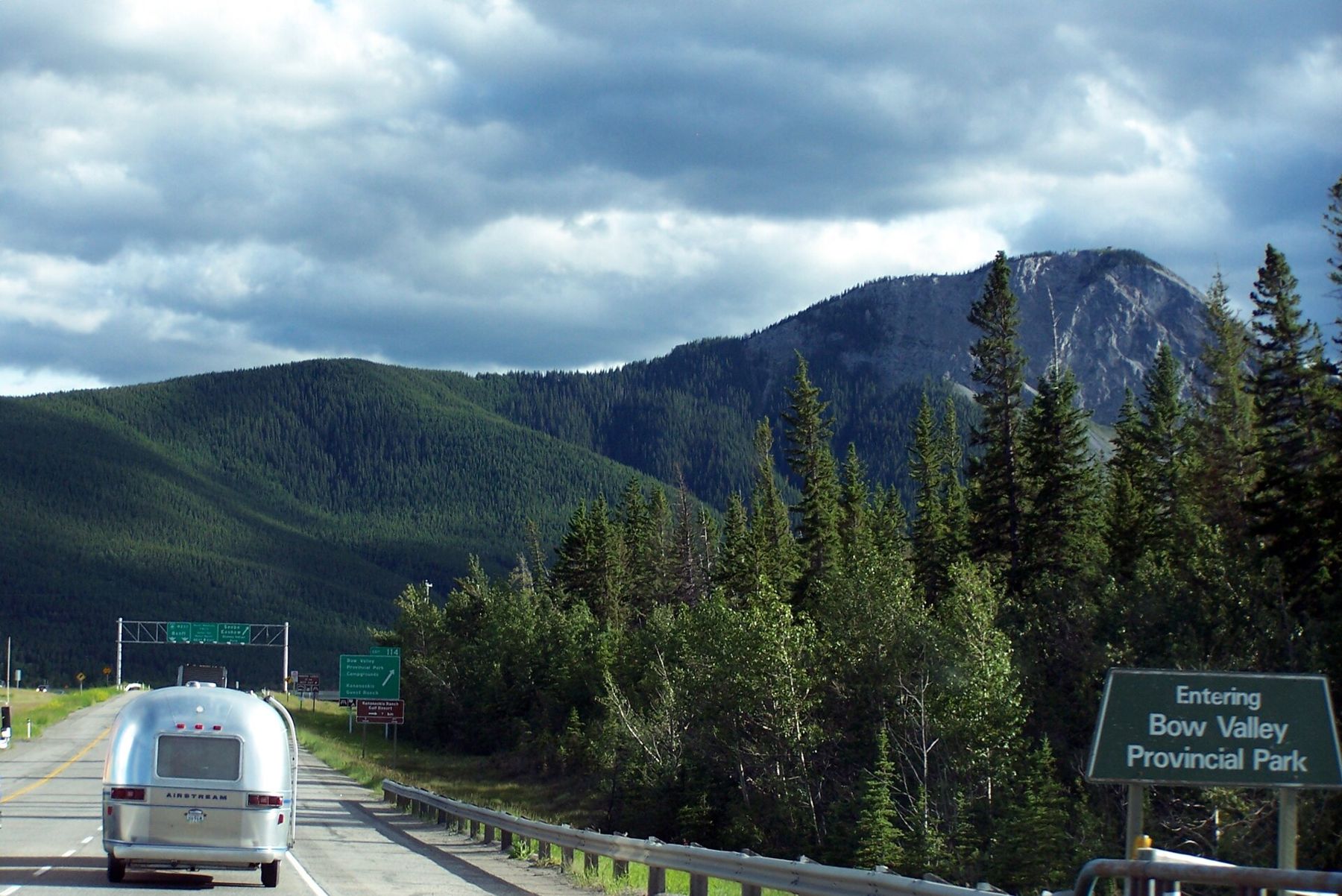
How to pass a sheep or an elk
Slow down as soon as you see an animal on or near the road. Expect others nearby: sheep and elk move in groups, and a lamb or calf may be hidden in the ditch. Let them move off at their own pace, and drive slowly past once the way is clear. Do not honk, rev the engine or edge the car into them; a startled animal can jump the wrong way, into your path or into the next lane.
If you want a photograph, pull completely off the road at a proper pull-out or wide shoulder where you can see oncoming traffic, put on your hazard lights and stay in the vehicle. Take your picture and move on. A car parked half on the road, with people standing beside it, creates a wildlife jam that can stretch for hundreds of metres and lead to collisions further back.
Bears on the verges
Bears are a different matter. In summer, especially when buffaloberries ripen along the roadsides in July and August, black bears and grizzlies feed in the open beside Highway 40 and the roads into the Kananaskis Lakes. They may stay in one place for an hour or more.
The rule for bears is simple: do not stop. If you must slow down, stay in your vehicle with the windows up, and keep moving. A bear that becomes used to cars and people stopping beside it loses its natural wariness. Bears that become too comfortable around people are often relocated or destroyed. Park staff sometimes close pull-outs or post staff at roadside bears to keep traffic moving; follow their instructions.
Also on Highway 40The Highwood Pass: Alberta's highest paved road, open half the yearWhy feeding is so harmful
Feeding wildlife in Kananaskis Country is illegal and carries heavy fines. More importantly, it is often fatal for the animal. Sheep and deer fed by hand learn to approach cars and people, which brings them onto the road more often and into conflicts with drivers. Food that seems harmless, from bread to fruit, can make them ill. Bears that get human food once will seek it again, and a bear that associates people with food is a danger to everyone.
The same goes for leaving food or garbage behind at picnic areas and pull-outs. Use the bear-proof bins, and keep food sealed in your vehicle.
Keeping your distance on foot
If you leave the car, the distances to keep are the same as in the national parks: at least 30 metres from sheep, elk, deer and moose, and at least 100 metres from bears. That is about three bus lengths and the length of a football field. Elk are particularly dangerous in late spring, when cows defend their calves, and in autumn during the rut. Moose may look calm but can charge without warning.
Carry bear spray on any walk, even a short one from a pull-out, and know how to use it.
Where and when to look
Sheep are seen all year on Highway 40, particularly between Barrier Lake and the Kananaskis Village area and again near the Highwood Pass when the road is open. In autumn, rams are at their most visible, gathering for the rut and sometimes clashing heads with a crack you can hear from the car. Elk are often seen at dawn and dusk in the meadows along the Kananaskis River. Bears are most visible from late spring to early autumn.
Early mornings and evenings are the best times for wildlife, and also the times when animals are hardest to see against the road. Drive slowly at those hours, and watch for eyes reflecting in your headlights after dark.
A short word on the pass
A Kananaskis Conservation Pass is needed for any vehicle stopping in Kananaskis Country, including at roadside pull-outs. Part of the money goes towards conservation and visitor services, including the staff who manage roadside wildlife. Buy it online before you go, and display or register it as instructed.