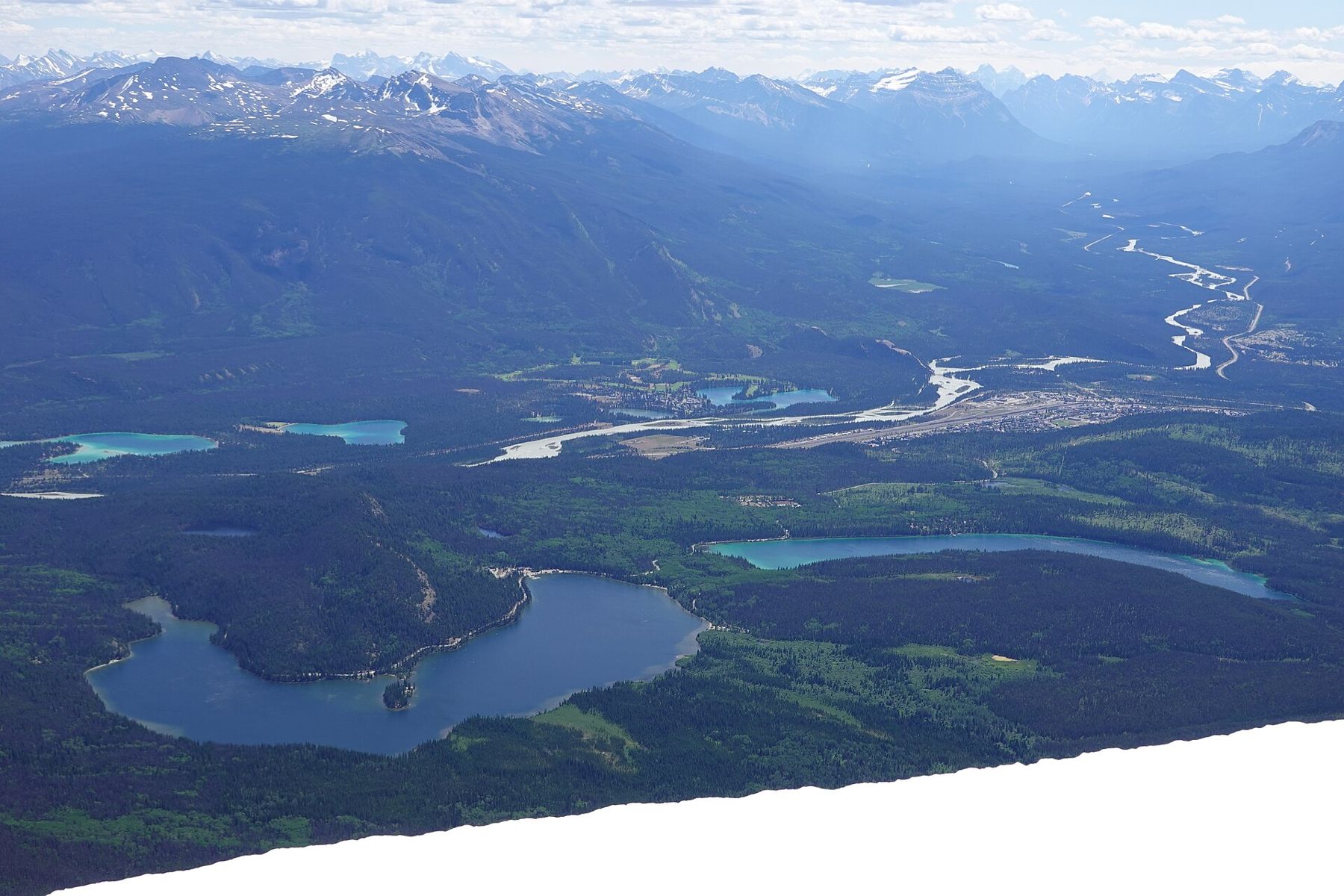
Light pollution has hidden the night sky from most people on Earth. In Jasper National Park it has not. The park was designated a dark sky preserve in 2011, covering a vast area of mountains and forest where artificial light is kept to a minimum. On a clear, moonless night, the Milky Way stretches from one horizon to the other above the valley, and the stars reflect in the still lakes just outside the townsite.
You do not need special equipment, a long drive or a guided tour to see it. You need a clear night, warm clothes and a little patience.
When the sky is darkest
Jasper sits far enough north that summer nights are short and never fully dark around the solstice. From late May to mid-July, twilight lingers in the northern sky until well after midnight and returns before dawn. For real darkness, come from August onwards. Autumn and winter bring long nights, often crisp and clear, though cold.
The moon matters more than the season. A full moon washes out the fainter stars and the Milky Way entirely. Plan around the new moon, or the days either side of it, and check the moonrise time as well as the phase, when the moon sets early or rises late. Weather apps that show cloud cover by the hour are a great help in the mountains, where valleys can clear quickly after rain.
Pyramid and Patricia lakes
The closest dark places to town are the lakes on the bench above it, reached by Pyramid Lake Road. Patricia Lake comes first, a long, quiet lake with forested shores. Pyramid Lake lies a little further on, below the red-brown bulk of Pyramid Mountain. A short wooden footbridge leads to a small island on Pyramid Lake, a popular spot for night photographers looking north over the water.
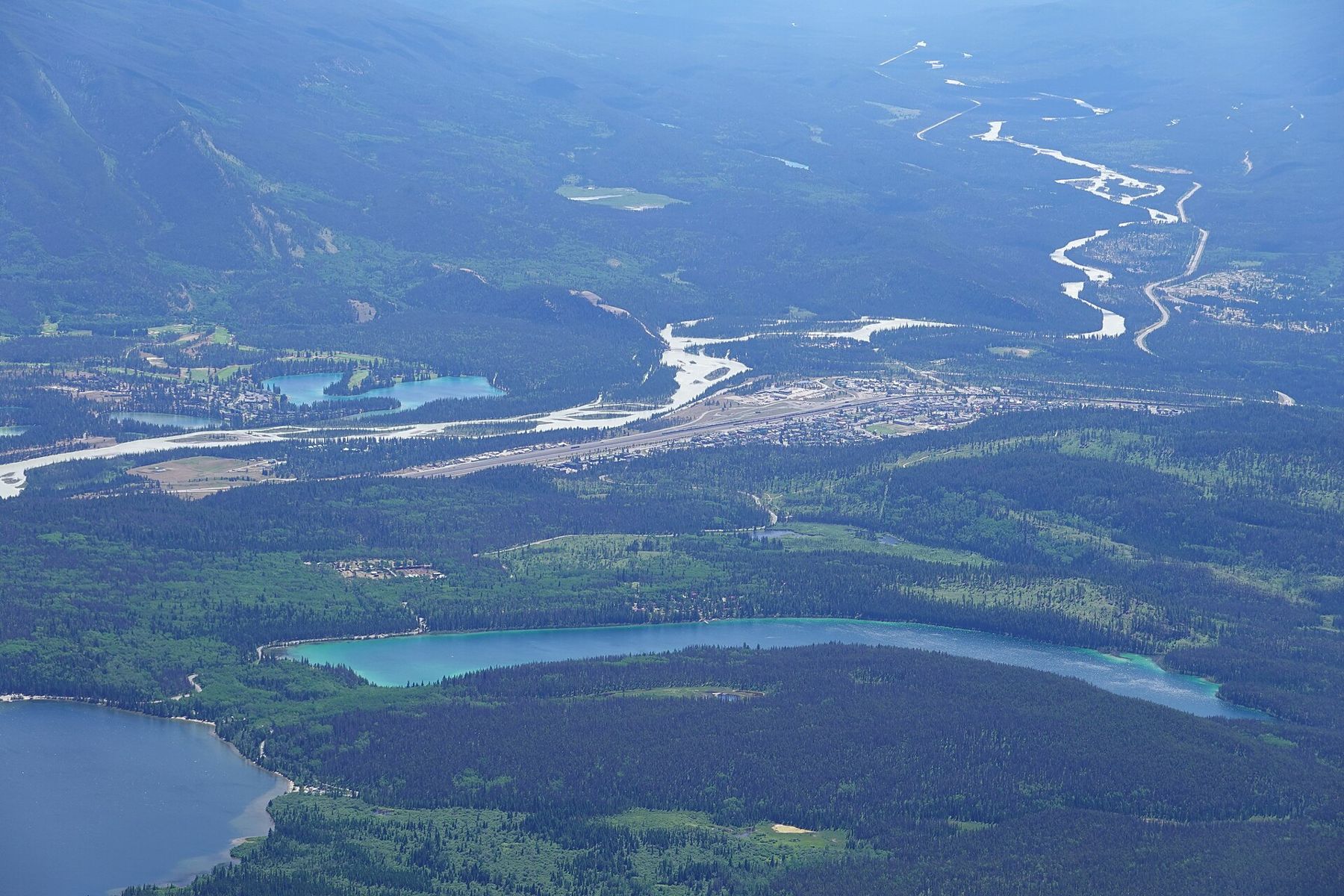
Both lakes are only a few minutes' drive from the townsite, yet far enough from its lights that the sky opens up. Find a quiet spot on the shore away from parked cars and the road, switch off your lights and let your eyes adjust for twenty minutes or more. The longer you wait, the more you see.
Also on Highway 16Maligne Canyon, Medicine Lake and Maligne Lake: one road out of JasperFurther out of town
The darkest skies are further from Jasper, along Maligne Lake Road towards Medicine Lake or along the Icefields Parkway to the south. Medicine Lake, with its wide views and low horizon, is a favourite. Pull-outs along the Parkway give clear views to the south, where the Milky Way's bright core lies low in late summer.
Driving at night here needs care. Elk, deer, bighorn sheep, wolves and bears use the roads after dark, and many collisions happen at night. Drive slowly, watch the verges and use your high beams only when you are sure no one is coming.
The northern lights
Jasper is far enough north to see the aurora borealis when solar activity is strong. Displays are unpredictable, and they are most often seen from autumn to spring, when nights are long and dark. When they appear, they usually glow low on the northern horizon, sometimes rising overhead in curtains of green and occasionally red.
Aurora forecasts give a rough idea of the chances on a given night, but the only way to be sure is to be outside under a clear sky. The lakes north of town, with their open views to the north, are good places to watch.
Red light and good manners
White light ruins night vision, both yours and everyone else's. Use a red torch or a headlamp with a red setting, and keep it pointed down. When arriving at a dark spot by car, dip your headlights and switch them off as soon as you can. Photographers setting up long exposures will thank you.
Keep noise down, too, and keep pets close and quiet; sound carries a long way over still water at night, and others may be listening for owls, loons or the distant howl of wolves. Bring warm layers, a hat and gloves, even in August: temperatures drop sharply after sunset, and frost is possible at any time of year.
The fire, and what has changed
In July 2024, a large wildfire swept into the Jasper townsite, destroying a significant part of it and burning large areas of forest around it. Rebuilding has been under way since. Some areas, trails and facilities around town have been closed or changed as a result, and some viewpoints now look out over burned slopes.
The sky itself is unchanged, and the dark sky preserve remains. The burned forest around town has even opened up some views that were hidden behind trees before, though walking off-trail in burned areas is unsafe because of falling trees and unstable ground. Before you go, check what is open and which roads and lakeshores are accessible. The park's annual dark sky festival, held in autumn, is a good time to visit, with talks and telescope sessions for all levels; dates and programmes vary from year to year.
Pairing a dark sky night
A night under the stars fits well after a day on the Maligne Lake Road or a long drive in from the Icefields Parkway. Eat early, rest for a few hours and head out after the sky is fully dark, with a hot drink in a flask for the wait.